REVIVE/احیا
Vanderbilt University Museum of Art
2022
This curatorial project brought women scholars, curators, and visual artists together for a novel interpretation of the past and explored how descriptive text evolves into tangible expression. Through historical ceramic objects, the project focuses on colonial histories and narratives which have compromised the stories of women, especially women of color, and negated their various roles in art. Participants will discuss reinterpretation and reimagination of historical objects in institutional spaces and new strategic plans in curatorial practices in contemporary art.


Curatorial Statement:
Throughout history, ceramic objects have been vehicles for imagination, ideology and action. Through their form, function, aesthetic, and meanings they give us a glimpse of the past. As the world shifts to new possibilities and practices due to distance communication and connection, objects of the past can stimulate our imaginations and inspire us to new interpretations and production. The first phase of this multi-faceted project brings together women from the Middle East and its surrounding areas with women whose research and/or artistic practice is intrinsically connected to the region.
The exhibition focuses attention on this underrepresented population’s wide-ranging artistic roles and provides a platform where their voices can be heard, and their expertise and contributions recognized.In this collaboration, a group of scholars and writers each choose one object from the ceramic collections at Museum of Art at Vanderbilt University. Each person provided a formal, conceptual written description of the artwork to one of the selected artists. The artists created an artwork based solely on the description they receive, as selected piece remained anonymous until the opening night of the exhibition at the Museum at Vanderbilt university. While the artists had freedom of interpretation, some semblance of a formal and conceptual connection based on the rescript ion were encouraged. Each artist’s artwork stands as a new and individual piece while it evidenced its relatedness with the original. Through this interchange and collaboration, there was an examination of the contrasts between the concrete and abstract and how descriptive text can evoke meaningful expression to create a tangible response.
This project explores colonial histories and narratives which have compromised the stories of women, especially women of color, as thinkers and makers, and negated their role in the process of creating art, as well as writing and interpreting it. This segment addresses the role of historical ceramic objects and examines new strategic plans in curatorial practices in contemporary art. The reinterpretation and re-imagination of historical objects in institutional spaces would be articulated through the combined voices of women writers, scholars and artists.
Artworks in Dialog


From artists of the past to artists of the present time, this exhibition explores the continuum of creativity through text and interpretation.

Historical Object: Artist Unknown. Showa period, Japan. Teapot with black, brown and ochre glazes. Stoneware. Vanderbilt University Collection. Description of the Historical Object by Dr. Hiba Baroud.

Object: Artist Unknown. Glazed ceramic Ewer in the form of a duck. Sawankhalok ware. Vanderbilt University Collection. Description of the Historical Object by Dr. Erin York.

Historical Object: Artist Unknown. Choson Dynasty, Korea. Bottle-shaped vase with painted design of willow tree and herons. Stoneware. Vanderbilt University Collection. Description of the Historical Object by Dr. Shival Balaghi
Artist: Krish Rumman

Historical Object: Artist Unknown. Japan. Mizusashi (Tea ceremony water jar). Porcelain. Vanderbilt University Collection. Description of the Historical Object by Malaka Gharib

Historical Object: Haverford Painter. Classical period, Italy. Red-figure bell krater. Terracotta. Vanderbilt University Collection. Description of the Historical Object by Raheleh Filsoofi
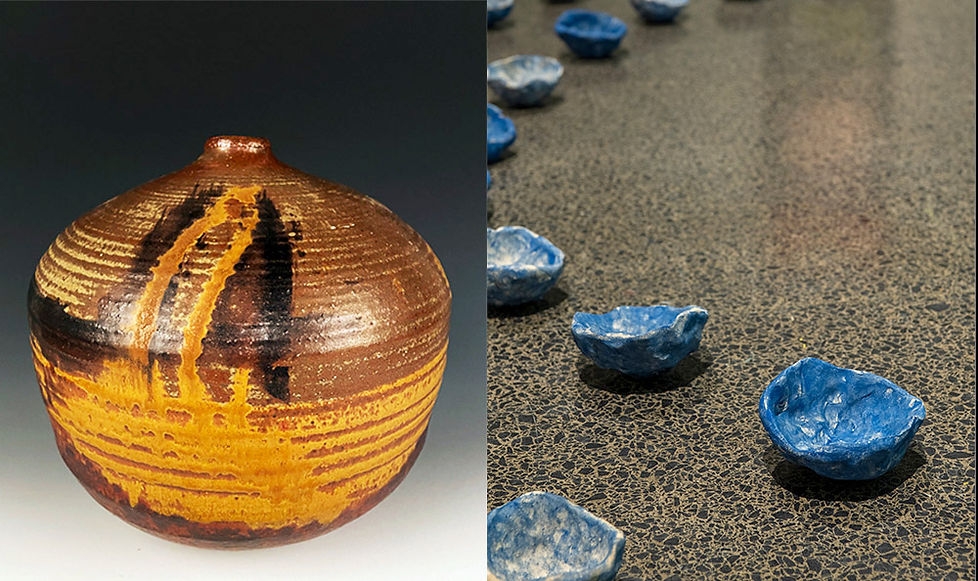
Object: Takaezu Toshiko. Japan. Vase with small opening. Stoneware, Vanderbilt University Collection. Description of the Historical Object by Dr. Zeinab Haratipour

Historical Object: Artist Unknown. Iran. Bowl with design of a rabbit in the center. Ceramic. Vanderbilt University Collection. Description of the Historical Object by Dr. Sheba Kaarim